Anna Wolf · 14 October 2026
Waldiva Educational Districts Roll Out Field-Based Modules on Local Environmental Heritage
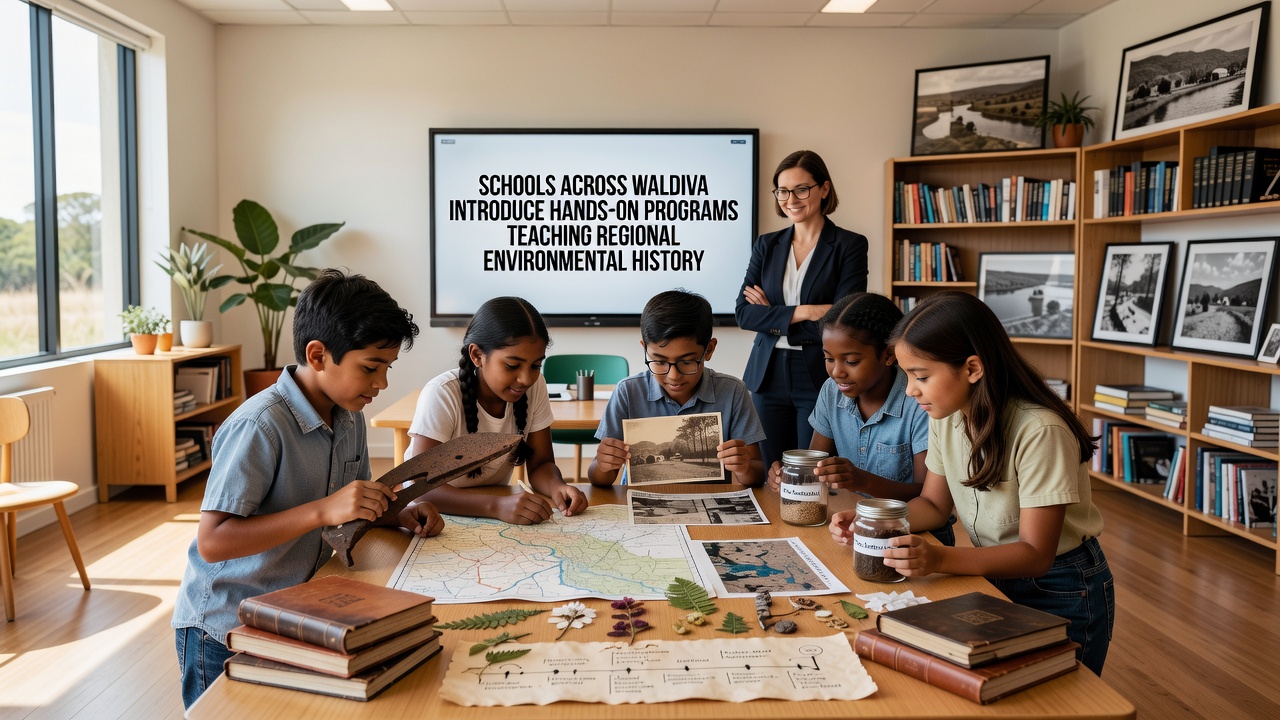
Schools throughout the Waldiva region have begun integrating hands-on programs that focus on teaching regional environmental history through direct observation and practical activities, and these initiatives draw from documented changes in local landscapes over recent decades. Educational administrators report that the programs combine classroom study with outdoor sessions where students examine historical records alongside physical evidence such as old riverbeds and reforested areas.
Data from the Waldiva Regional Education Authority shows that 28 primary and secondary institutions started these modules during the 2025-2026 academic year, and participation numbers reached approximately 4,200 students by the start of the fall term. Researchers at the University of Waldiva note that the approach links specific historical events, including 19th-century agricultural shifts and 20th-century industrial expansion, to measurable alterations in local biodiversity and water systems.
Program Structure and Daily Activities
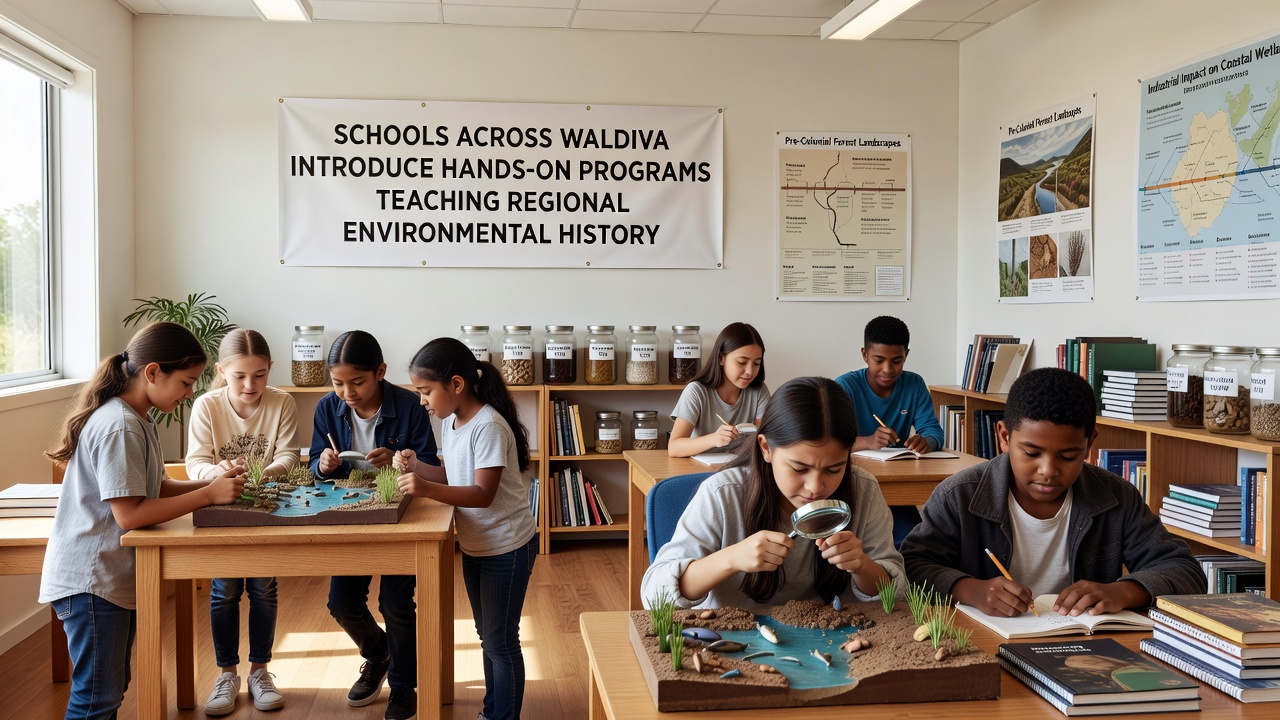
Each participating school organizes weekly sessions that alternate between archival research and site visits, while teachers coordinate with local historians and environmental technicians to guide the process. Students collect soil samples from areas with documented land-use changes, then compare those findings against records from the regional archives that date back to the 1800s. The curriculum also includes mapping exercises where participants overlay current satellite imagery with historical survey maps to identify patterns of deforestation and subsequent reforestation efforts.
One study released by the European Environment Agency in 2025 indicated that similar experiential programs in other parts of Europe produced measurable gains in student retention of regional ecological data, and Waldiva administrators have adopted comparable assessment tools to track progress. Sessions often conclude with group presentations in which students present their field observations and connect them to broader regional timelines.
October 2026 Schedule and Regional Coordination
October 2026 marks the launch of a coordinated series of inter-school field days scheduled across three Waldiva districts, and these events will bring together classes from different institutions to examine shared environmental history sites such as former mill ponds and abandoned quarry areas. Organizers have arranged for guest lectures from the Waldiva Historical Society on the same days, allowing students to hear firsthand accounts of land management practices that shaped the current terrain.
Coordinators state that the October timeline aligns with seasonal conditions that make certain outdoor sites more accessible for sample collection, and transportation between locations is handled through a shared district fleet to reduce individual school costs. The schedule includes designated days for data sharing among participating classes, so findings from one site can inform activities at neighboring locations.
Integration With Existing Curriculum Standards
The new modules fit within the existing Waldiva regional science and history frameworks without requiring additional instructional hours, because planners combined segments from both subjects into single extended periods. Teachers receive training through a series of workshops offered by the Waldiva Teacher Development Center, and these sessions cover both the technical aspects of field sampling and methods for guiding student analysis of primary sources. Assessment rubrics emphasize accurate recording of observations and clear linkage of those observations to documented historical events rather than interpretive conclusions.
Figures released by the Waldiva Regional Education Authority indicate that 92 percent of involved teachers completed the initial training by September 2026, and follow-up sessions are planned for early 2027 to address any adjustments needed after the first full term. The approach mirrors elements described in reports from the Australian Environmental Education Association, which has tracked comparable regional history programs in several states since 2023.
Resource Allocation and External Support
Schools draw materials from a central lending library that includes portable testing kits, historical map reproductions, and digital tablets preloaded with regional geographic information system layers. Funding for the kits and transportation comes from a combination of district budgets and a one-time allocation approved by the Waldiva Regional Council in late 2025. Several local businesses have also contributed equipment on a temporary basis, including waterproof field notebooks and basic water-testing strips.
Observers from the European Commission Directorate-General for Environment visited two pilot schools in September 2026 to review documentation practices, and their preliminary notes highlighted the consistent use of standardized data-collection forms across sites. These visits form part of a broader review of environmental education initiatives that the commission is conducting across member regions.
Conclusion
Schools across Waldiva continue to refine the hands-on environmental history programs as the 2026-2027 year progresses, and administrators plan to compile comparative data from all participating sites by the end of the spring term. The October 2026 inter-school events represent one milestone in this ongoing rollout, while training sessions and resource updates remain scheduled to support consistent implementation. Reports from the involved institutions indicate steady enrollment numbers and regular documentation of student activities, providing a record of how the programs operate within the regional curriculum structure.